
Last updated: 2026-03-18
Reading duration: 16 minutes
You wake up, swing your feet to the floor, and that first step sends a sharp stab through your heel. Again. Weeks of stretching, icing, and painkillers, and the pain barely budges.
Red light therapy — also called photobiomodulation (PBM) — delivers specific wavelengths of light (typically 630–660 nm red and 810–850 nm near-infrared) into damaged plantar fascia tissue. Clinical studies show it can reduce inflammation, support collagen repair, and ease heel pain, often within four to eight weeks when used with the right parameters and as part of a broader rehab plan.
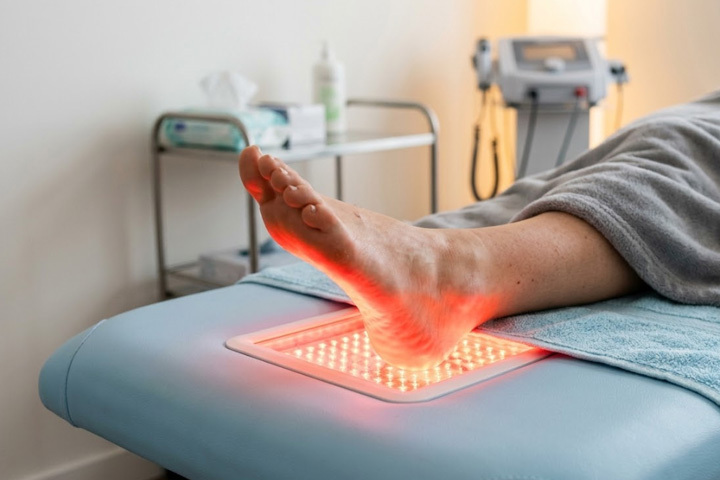
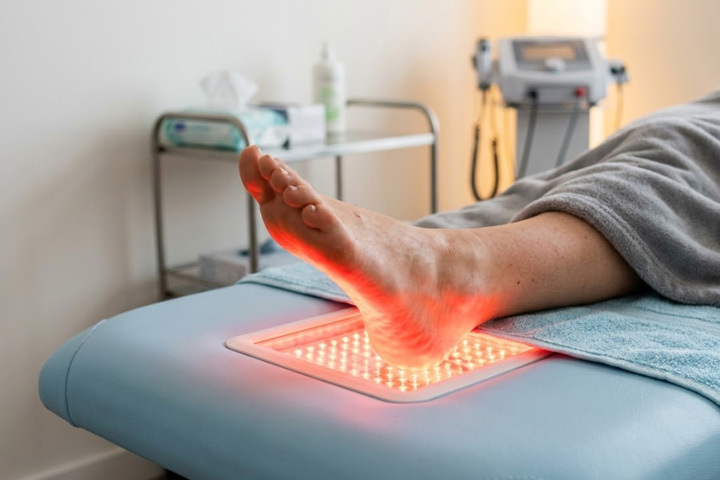
Red light therapy panel treating plantar fasciitis heel pain
In this guide, we break down exactly how red light therapy works for plantar fasciitis, what wavelengths and dosing parameters matter, how it stacks up against other common treatments like shockwave therapy and cortisone injections, and what kind of timeline you can realistically expect. Whether you run a physiotherapy clinic, manage a sports recovery facility, or are simply looking for a drug-free option for persistent heel pain, this piece gives you the practical details to make an informed decision.
Key Takeaways
- Red light therapy at 630–660 nm (red) and 810–850 nm (near-infrared) penetrates deep enough to reach the plantar fascia, stimulating cellular repair and reducing inflammatory markers.
- Most clinical protocols use 4–15 J/cm² energy density, 3–5 sessions per week, over a 4–8 week treatment cycle.
- A 2015 randomized controlled trial (Higgins et al., Journal of Chiropractic Medicine) found that LED therapy significantly reduced pain scores in plantar fasciitis patients compared to sham treatment.
- Red light therapy works best as part of a combined approach — paired with stretching, proper footwear, and activity modification, not as a standalone cure.
- It is non-invasive, has very few reported side effects, and can be used both in clinical settings and at home with the right device.
- No single treatment eliminates plantar fasciitis overnight. Set realistic expectations: noticeable improvement usually takes 3–6 weeks of consistent use.
What Is Plantar Fasciitis? Understanding the Root Cause of Heel Pain
Plantar fasciitis is the most common cause of heel pain in adults, affecting roughly 1 in 10 people at some point in their lives. It involves irritation or degeneration of the plantar fascia — a thick band of connective tissue running from the heel bone to the base of the toes — and it can make every step feel like walking on broken glass.
Anatomy of the Plantar Fascia: Why This Tissue Is Vulnerable
The plantar fascia is not a muscle. It is a dense, fibrous ligament that acts like a bowstring supporting the arch of your foot. Every time you stand, walk, or run, this tissue absorbs significant force. Over time, repetitive stress can cause microtears, leading to thickening, inflammation, and pain — especially at the point where the fascia attaches to the heel bone (the calcaneal tuberosity).
What makes healing difficult is that the plantar fascia has limited blood supply compared to muscles. Less blood flow means fewer nutrients, slower repair, and a greater tendency for the condition to become chronic.
Common Causes and Risk Factors
Plantar fasciitis does not strike randomly. Several factors increase risk:
- Repetitive impact: Runners, dancers, and people who stand for long hours (nurses, retail workers, factory staff) put constant strain on the fascia.
- Body weight: Higher body mass increases the mechanical load on the plantar fascia with every step.
- Foot mechanics: Flat feet, high arches, and tight Achilles tendons change how force distributes through the foot.
- Age: The condition peaks between ages 40–60, as tissue elasticity declines.
- Footwear: Worn-out shoes or shoes with poor arch support are a frequent, underestimated contributor.
Symptoms, Stages, and When It Becomes Chronic
The hallmark symptom is a stabbing pain at the bottom of the heel, worst with the first steps in the morning or after sitting for a long time. The pain may ease as you walk around, then return after prolonged activity.
Most cases resolve within 6–12 months with conservative treatment. But roughly 10–20% of patients develop chronic plantar fasciitis that resists standard approaches. This is where alternative therapies — including red light therapy — enter the picture.
Do not ignore heel pain that lasts more than two weeks. The earlier you address it, the less likely it becomes a long-term problem.
What Is Red Light Therapy (Photobiomodulation)?
Red light therapy, formally known as photobiomodulation (PBM), uses low-power light in the red and near-infrared spectrum to stimulate cellular activity in targeted tissues. It is not a heat treatment. The light itself triggers biochemical reactions inside cells without raising tissue temperature significantly.